Accessories / Capacity is only the beginning
Accessories: Small Details, Daily Consequences
A bag’s useful size is the load you can carry and reach comfortably, not just the number of litres on its label.
Make a load list before a shortlist
Put a normal day’s contents on a table. Include the items that are easy to forget: a lunch container, charger, water bottle, folded layer and the things you pick up on the way home. A bag that fits an empty laptop sleeve may become awkward once those objects compete for space. Capacity is useful context, but shape and compartment layout determine what actually goes inside.
The Osprey Daylite Plus and original Fjällräven Kånken represent two distinct approaches. The Daylite Plus has a stated 20-litre capacity and a more technical arrangement of straps and pockets. The original Kånken has a stated 16-litre capacity and a box-shaped main compartment. Those facts describe layout; they do not prove which bag will feel better on your shoulders.
Where the Daylite Plus makes sense
The Daylite Plus is a reasonable research starting point for a day that combines commuting, errands and a walk. Its external organisation and adjustment features create more ways to manage a changing load. Check the current product generation and regional specification, because a familiar model name can persist through design updates.
The deciding question is whether you will use that organisation. Extra straps can help control a load, but can also add handling steps when you are repeatedly taking the bag off in a crowded space. A technical back panel is not a guarantee that you will stay cool, and a sleeve described as multifunctional is not proof of suitable protection for every laptop.
Measure your device with its case and compare it with the manufacturer’s guidance. If you need impact protection, inspect the actual padding and base arrangement rather than assuming that a sleeve creates a protective laptop compartment. We have not measured drop protection or carried the pack for a long-term comfort trial.
Where the original Kånken makes sense
The original Kånken’s wide-opening main compartment is a clear attraction when you want to see and pack a simple rectangular space. Its top handles give another way to lift or move the bag. The straightforward layout may suit a light everyday load better than a collection of small specialist compartments.
The compromise is that simplicity transfers some organisation to you. Loose cables, keys and small objects may need pouches. The original model’s relatively minimal shoulder straps deserve attention if you carry dense items. Optional accessories, where available, change both the total cost and the character of the purchase.
Be precise about the model. Kånken Laptop versions are not identical to the original Kånken, and the name alone does not establish device fit. Likewise, a fabric described as water-resistant should not be treated as a promise that electronics will remain dry in sustained rain. Use the manufacturer’s care guidance and consider separate protection for vulnerable contents.
The best pocket is the one you can reach when the rest of the bag is full.
Compare the daily consequences
| Detail | Daylite Plus | Original Kånken |
|---|---|---|
| Stated capacity | 20 litres. | 16 litres. |
| Organisation approach | More technical external organisation. | Simple main space with smaller external storage. |
| Fit question | Do adjustments suit your torso and loaded routine? | Are the original straps comfortable with your normal load? |
| Cost to investigate | Any additional protective sleeve you need. | Any pouches or strap accessories you need. |
Inspect materials without making durability promises
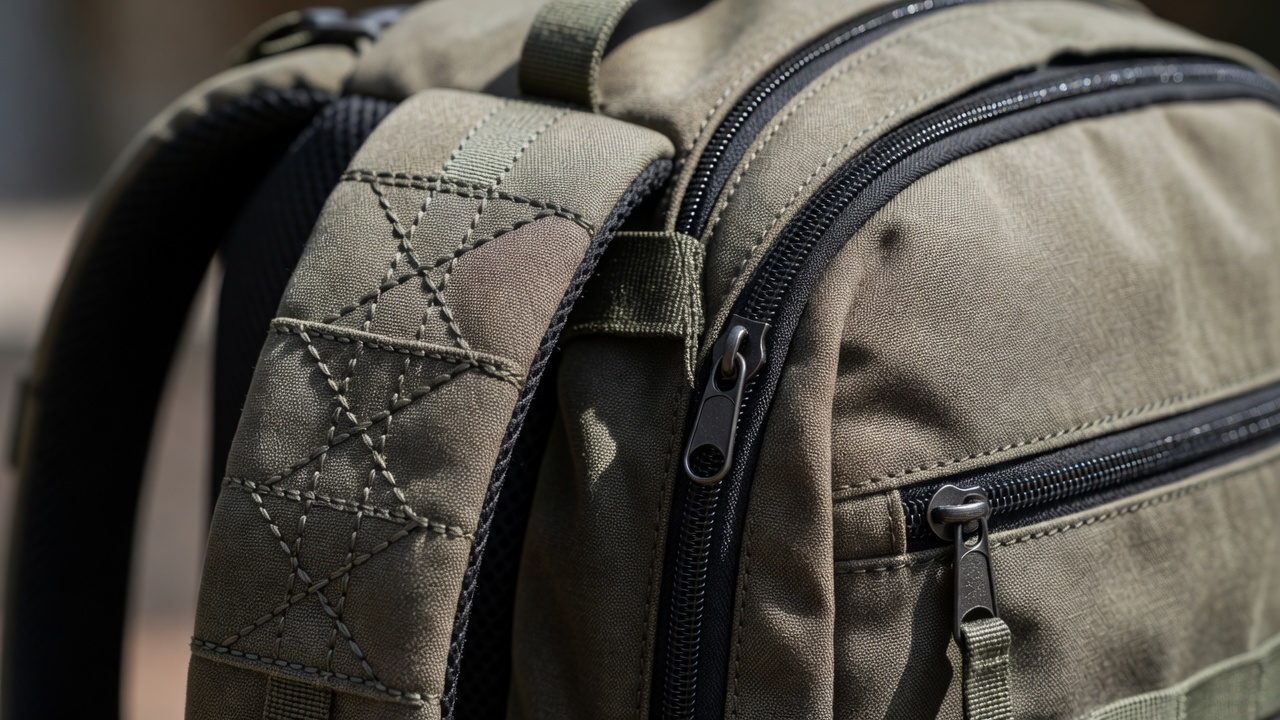
Fabric type, seam placement and zipper construction are worth examining, but none provides a reliable lifespan prediction on its own. Look at where straps attach, whether access remains easy when the bag is packed and how the base meets the surfaces where you put it down. Ask the seller about repair channels and the manufacturer’s actual warranty terms in your country.
Recycled material claims and certifications can answer specific sourcing questions. They do not automatically demonstrate a lower whole-life impact, better abrasion resistance or superior repairability. Treat each claim according to what it covers. A bag kept in useful service can be a sensible choice, but this guide does not calculate environmental payback or rank unmeasured sustainability outcomes.
Spend more for a clear gain
- A demonstrably better fit with your load.
- Access that reduces daily frustration.
- Useful repair or support arrangements.
Keep the compromise visible
- More pockets can reduce flexible space.
- More capacity can invite unnecessary weight.
- A style premium need not improve comfort.
If possible, try both approaches with the same contents and walk beyond a few steps. Check reach, pressure points and how the bag sits with your usual coat. That short practical check answers a question no capacity chart can settle.
Original product references
- Osprey — locate the current Daylite Plus specification, dimensions and regional support terms.
- Fjällräven — check the original Kånken specification, care instructions and differences from Laptop variants.
The comparison is desk-researched. Photography is illustrative; comfort, abrasion resistance and long-term durability have not been tested here. Send your load and fit constraints.